8 Easy Ways to Start Seeds for Your Vegetable Garden
Starting seeds is one of the most exciting parts of gardening. A tiny seed has the potential to become a tomato plant loaded with fruit, a row of crisp lettuce, or a bed full of colourful flowers.
The good news is that you don't need expensive equipment to grow healthy seedlings. Whether you're gardening in a backyard, on a patio, or in a small space, there are plenty of affordable ways to start seeds successfully.
Disclosure: Some of the links below are affiliate links, meaning, at no additional cost to you, I will earn a commission if you click through and make a purchase.
In this guide, I'll walk you through eight different seed-starting methods, including several budget-friendly and biodegradable options. Each method has its own advantages, so you can choose the one that best fits your space, budget, and gardening style.
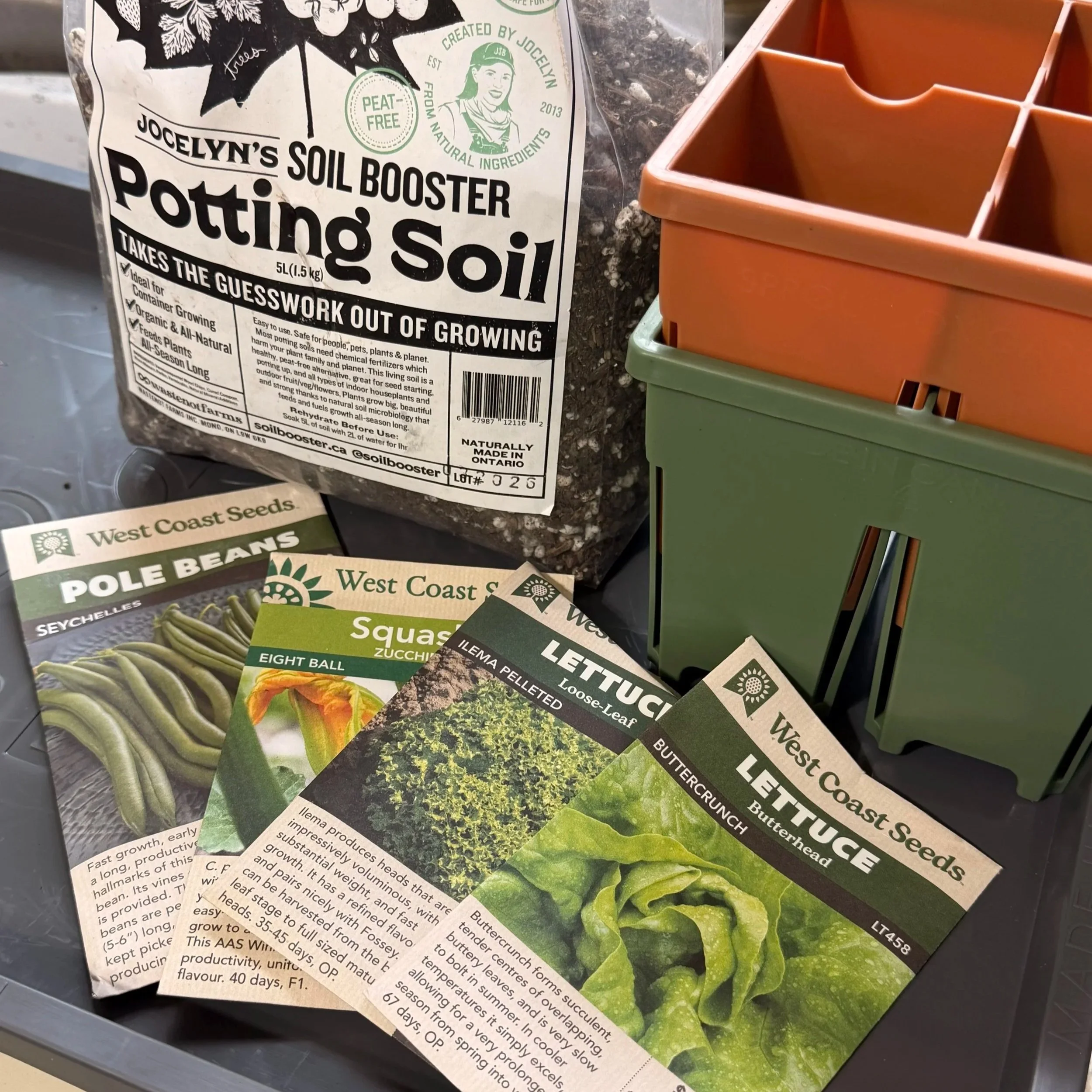
I can’t help but get excited when its time to start seedlings for the new growing season. Ordering seeds (I get mine from Baker Creek Heirloom Seeds) makes me feel like a kid making out their Christmas list. I love planning out what I am going to grow, where I am going to plant them and what I will do with my bountiful harvest! But before that can happen then seeds must be sowed. Just remember that healthy seedlings need three things: moisture, warmth, and adequate light. Provide those basics and you'll be well on your way to a productive growing season.
What is the best way to start seeds?
In my books that is a trick question as the best way to start seeds depends on the crop and your growing conditions. Many gardeners use seed trays, paper pots, peat pellets, or hydroponic systems indoors, while crops like carrots, peas, and beans are often direct sown outdoors. The ideal method provides moisture, warmth, and adequate light while minimizing transplant shock. With that said let’s take a look at eight different ways for you to start your seedlings.
1. Toilet paper rolls
Toilet paper rolls make great little seeding starters. They will decompose in the soil and the roots will be able to grow through the toilet paper roll which will become softer as it gets wet. Once the seedlings are a few inches tall you can put the whole thing in soil and just let it do its thing.
I like using toilet paper rolls as it is giving a second use to something, plus it doesn’t cost anything. They work best for crops that dislike root disturbance, such as peas, beans, and sweet peas. Since the entire roll can be planted into the garden, transplant shock is minimized.
2. Non-Woven Nursery Bags
These little non-woven bags are lightweight and biodegradable to they are great for starting seedlings. The mesh allows the roots to easily penetrate into the soil. One thing you need to watch out for is that they don’t dry out which can happen quite quickly as the soil in these bags is exposed to the air. One way to prevent this is to keep the bags in a sturdy tray like this one, and bottom water them. Once the seedlings have been hardened off you can go ahead and just pop the plant, bag and all into the soil.
3. Egg cartons
You can use the egg cartons to either hold the eggshells in or you can use them as well to start your seedlings. I already save them and add them to my compost bin as brown matter, so I usually have them handy.
Once the seedlings have started to grow, the whole thing can be planted into the soil and it will biodegrade in place. You can put the egg carton into a clear plastic bag to turn it into a mini greenhouse as well.
A lot of people like to suggest using eggshells as seedling starters as well. But truthfully they are really too small to be effective for most plants. Also unless you crack the shells before planting them in the ground, they can actually impede the roots from getting into to soil. So they are better used in the garden or added into your compost.
So while egg cartons are an option, and you will see them all over the interwebs and Pinterest as a seed starting method, they are not one I use myself. Even worse, in my personal opinion, are the suggestions to use egg shells! If you do want to try out egg cartons as a seed starting method then I would suggest keeping it limited to seedlings that will be transplanted quickly. Each cell is fairly small and roots can become crowded if plants remain in them too long.
4. Peat pellets
Peat pellets are another option, they hold moisture well and they are fairly self-contained. All you need to do is soak them in water until they regain their normal height and then put your seed(s) in the little hole in the center.
Lots of them come with a mini “greenhouse” that they can sit in to help with germination. The “greenhouse” is usually flimsy but if you take care of it you should be able to save it and just get new peat pellets for the next season. When the seedlings have germinated, you can carefully peel off the mesh and then pop them into the soil to continue growing.
But while these peat pellets are cheap to buy and easy to find we should pause here to consider the environmental aspects of peat harvesting, which is a reason many gardeners have stepped away from it in favour of other alternatives like coco coir. They also have a habit of drying out quickly, so if you are using them you may want to put reminders in your phone if you are prone (like me) to forgetting things. But let’s take a look at peat for a second…
Peat forms in peatlands (also called bogs) over thousands of years as partially decomposed plant material slowly accumulates in waterlogged conditions. Because it forms so slowly, peat is considered a very slowly renewable resource—it can take centuries to replace what is harvested in a relatively short period.
Healthy peatlands provide important environmental benefits, including:
🌍 Storing large amounts of carbon, helping reduce greenhouse gases in the atmosphere.
💧 Filtering and storing water, which can improve water quality and reduce flooding.
🦆 Providing habitat for unique plants, birds, insects, and other wildlife.
🌱 Supporting biodiversity in ecosystems found nowhere else.
Harvesting peat can disturb these ecosystems and release some of the carbon that has been stored for thousands of years. While many peat producers follow restoration programs and environmental regulations, restored peatlands can take decades—or even centuries—to regain all of the ecological functions of a natural bog.
Should You Avoid Peat?
There isn't a single right answer. Some gardeners continue to use peat because of its excellent performance for seed starting, while others choose renewable alternatives such as:
🌴 Coco coir
🌿 Compost-based seed-starting mixes
🌾 Leaf mold
🌱 Wood fiber products
Each material has its own advantages and environmental considerations. For example, coco coir is renewable but must be transported long distances to many countries, giving it a different environmental footprint than locally produced peat. The most sustainable choice often depends on where you live, what products are available locally, and how you garden. Understanding the pros and cons of each option allows you to make an informed decision that aligns with your gardening goals and values.
5. Mini greenhouse or cold frame
Another great option to get your seedling off to a good start is using a greenhouse or cold frame. This will let you start them outside sooner, but definitely not as soon as you could if you started them indoors. I dream of building my own little greenhouse/potting shed, but in the meantime I am planning on building a few cold frames to help extend my outdoor growing season. I recently came across this cute little mini greenhouse from Ikea as well.
6. Paper pots makers
Even quicker to biodegrade than toilet paper rolls or egg cartons are newspapers. Which makes it perfect to use for seedling pots. All you need is a paper pot maker to help you make little pots to hold your seedlings. Just remember to stick to newspaper and not flyers, you don’t want anything colourful or glossy. These are nto ideal as they can contain inks and other things that don’t belong in the garden I did a video on making paper pots, you can check it out here.
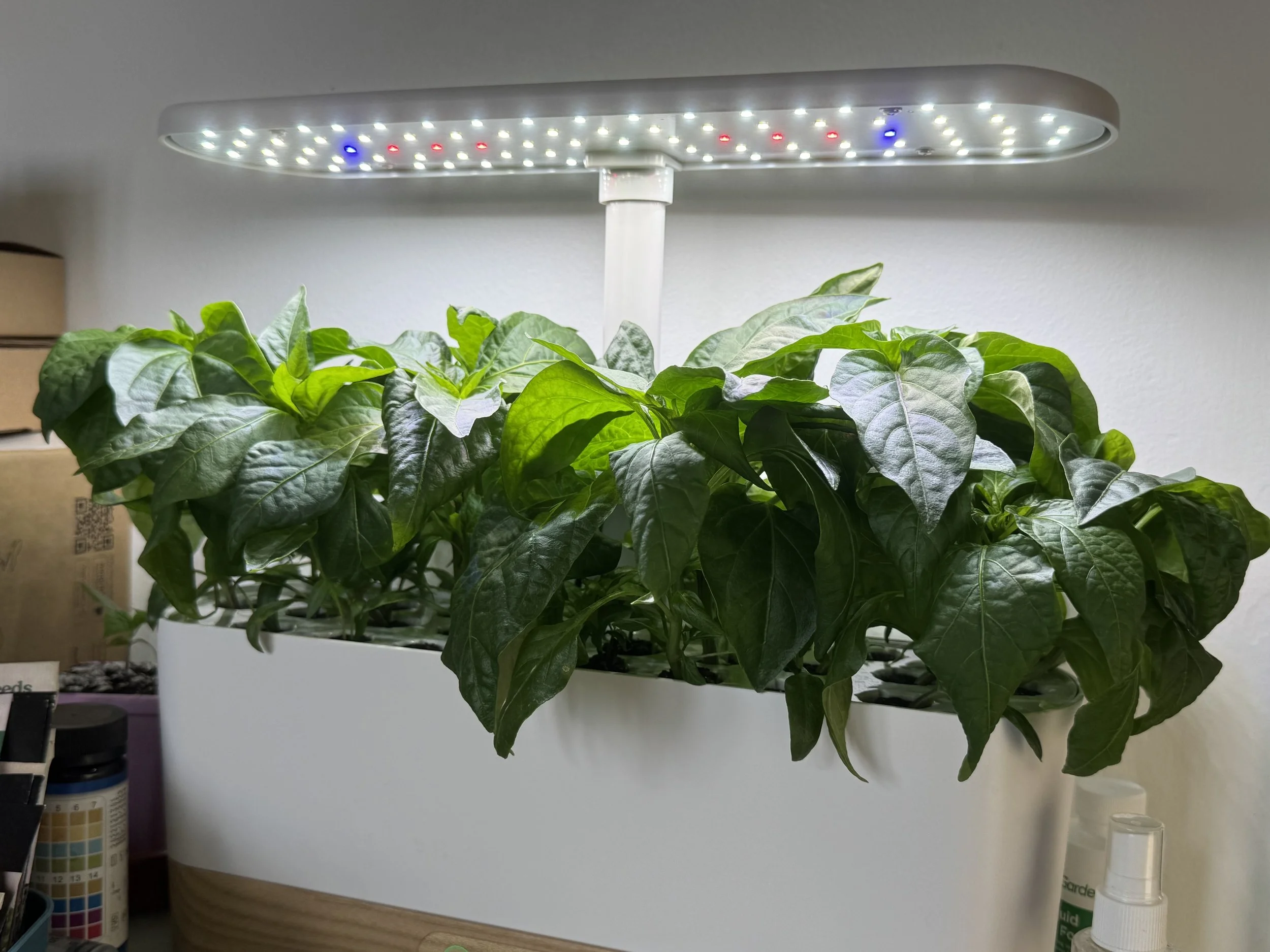
I used my AeroGarden Harvest Slim with the Seed Starting System to grow 23 pepper seedlings for my outdoor garden.
7. AeroGarden
I love using my Aerogarden Farm Plus to start my seedlings (as well as grow food in my basement year-round). It is super easy and they seedling get a jumpstart as plants germinated in the Aerogarden tend to sprout 5 times sooner!
When they are big enough transplant them into soil and put them under grow lights until it is time to harden them off and move them outside. Most AeroGarden models have seedlings starting kits (though they can be hard to find in Canada). I have them for my AeroGarden Farm, Harvest Slim and Sprout. Using the one for my AeroGarden Farm, I can start 85 seedlings in the same space I could normally grow 12 plants!
A big benefit of using a hydroponic system is the faster germination, 5x faster is what I always see mentioned but I plant to test it out for myself. I use it as my go-to if I am late starting my seedlings. Another plus is you can start a lot in a small footprint and you don’t have to worry about stand alone grow lights or worry about forgetting to water them!
Check out my other site The REAL Indoor Gardener or my other YouTube channel.
8. Direct Sowing Outdoors
If you live in a more moderate climate or depending on what you are growing, planting outside might be the best option. It will also depend on how long it takes the given plant to come to maturity. Natural sunlight is always best, so if this is an option then, by all means, go for it. Plants that prefer to be direct sown are things like peas, beans, carrots, radishes, beets (think root vegetables) as well as more finicky and diva-ish plants like melons and luffas that will literally stop growing for a bit if there roots are disturbed.
🌱 Final Thoughts
There is no single "best" way to start seeds. The right method depends on your budget, available space, and the types of crops you're growing. If you're looking for the lowest-cost option, toilet paper rolls, egg cartons, and homemade newspaper pots are excellent choices. If convenience is your priority, peat pellets or an AeroGarden can make the process easier. And for many vegetables, direct sowing outdoors may be all you need.
The most important thing is to get started. Every experienced gardener began with a packet of seeds and a willingness to experiment. Try a few different methods and see which works best for you and your own garden. There are so many different factors that can impact and determine what is best for your own situation. We all live in different climates and are dealing with different situations, so test out different methods so that you can develop, over time and with most likely multiple failed attempts, the bespoke “best” way for YOU to start seeds for your vegetable garden.
