🌻 How to Save Sunflower Seeds: When to Harvest, Dry & Store Them
If you're here because you want to know how to save sunflower seeds, don't worry—I got you.
Sunflowers will always have a place in my garden. Maybe it's because yellow is supposed to be a happy colour and seeing a giant sunflower makes me smile every damn time. Or maybe it's because the flowers become absolute bee magnets once they get going.
Either way, there's something particularly satisfying about growing a sunflower from seed, watching it turn into a giant flower, and then saving those seeds to grow even more sunflowers next year.
And fortunately, saving sunflower seeds is ridiculously easy.
The tricky part isn't actually saving the seeds. It's getting to them before the birds, squirrels and other garden freeloaders do.
In this guide, I'll show you how to tell when sunflower seeds are ready to harvest, three ways to protect the developing seed heads, and how to properly dry and store your seeds so they're ready for next year's garden.
🌻 Want to save more of your own seeds?
Sunflowers are one of the easiest crops to start with, but seed saving gets a little more complicated with some vegetables. Check out my guide to saving seeds from your garden for a deeper dive into the process.
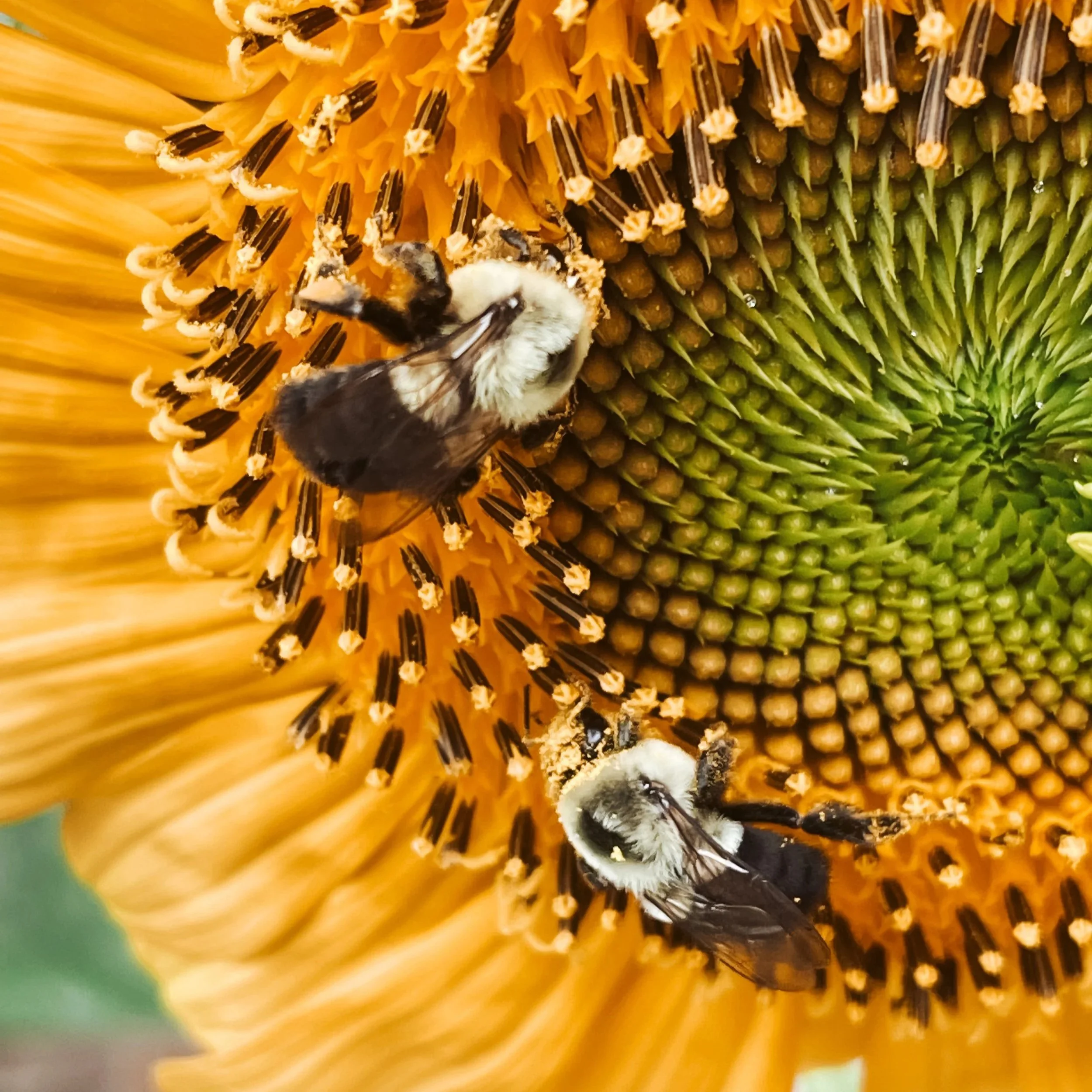
🐝 Bees Please!
Sunflowers bring bees to my yard like they were milkshakes 😂 The act like little airports with bees harvesting pollen all day long. It is an amazing sight to see.
A Few Fun Facts About Sunflowers
Before we get into saving those seeds, let's talk about the ridiculously cool plant we're dealing with.
🌻 Young sunflowers are heliotropic, meaning the developing flower heads track the sun across the sky. As the plant matures, the stem stiffens and the flower generally settles facing east.
🐝 Sunflowers are fantastic pollinator plants. Bees and other pollinators are attracted to their abundant nectar and pollen.
🌼 A sunflower isn't actually one flower. That giant centre is made up of hundreds (and sometimes thousands) of tiny individual flowers called disc florets. Each one has the potential to produce a seed.
🌱 Sunflowers come in an enormous range of sizes. Depending on the variety, they can be compact enough for containers or grow well over 10 feet tall.
🌻 Not all sunflowers produce the same type of seed. Some varieties are grown primarily for ornamental flowers, while others are specifically valued for edible or bird-friendly seeds.
And that giant flower head? It's essentially a seed-saving factory just waiting to happen.
When Should You Harvest Sunflower Seeds?
This is probably the most important part of the whole process.
Don't harvest sunflower seeds too early.
You want the seeds to have enough time to fully mature on the plant. Fortunately, sunflowers give you several visual clues when they're getting close.
Look for these signs:
The flower head begins to droop or bend downward.
The back of the flower head changes from green to yellow, yellow-brown or brown.
The petals have dried up and fallen away.
The individual disc florets become dry and can be brushed away easily.
The seeds look plump and mature rather than small and flat.
The seeds are becoming easier to loosen from the flower head.
You don't necessarily need to wait until every seed head is completely brown, especially if birds and squirrels are already helping themselves.
If the seeds look mature but wildlife is starting to beat you to the harvest, it's time to intervene.
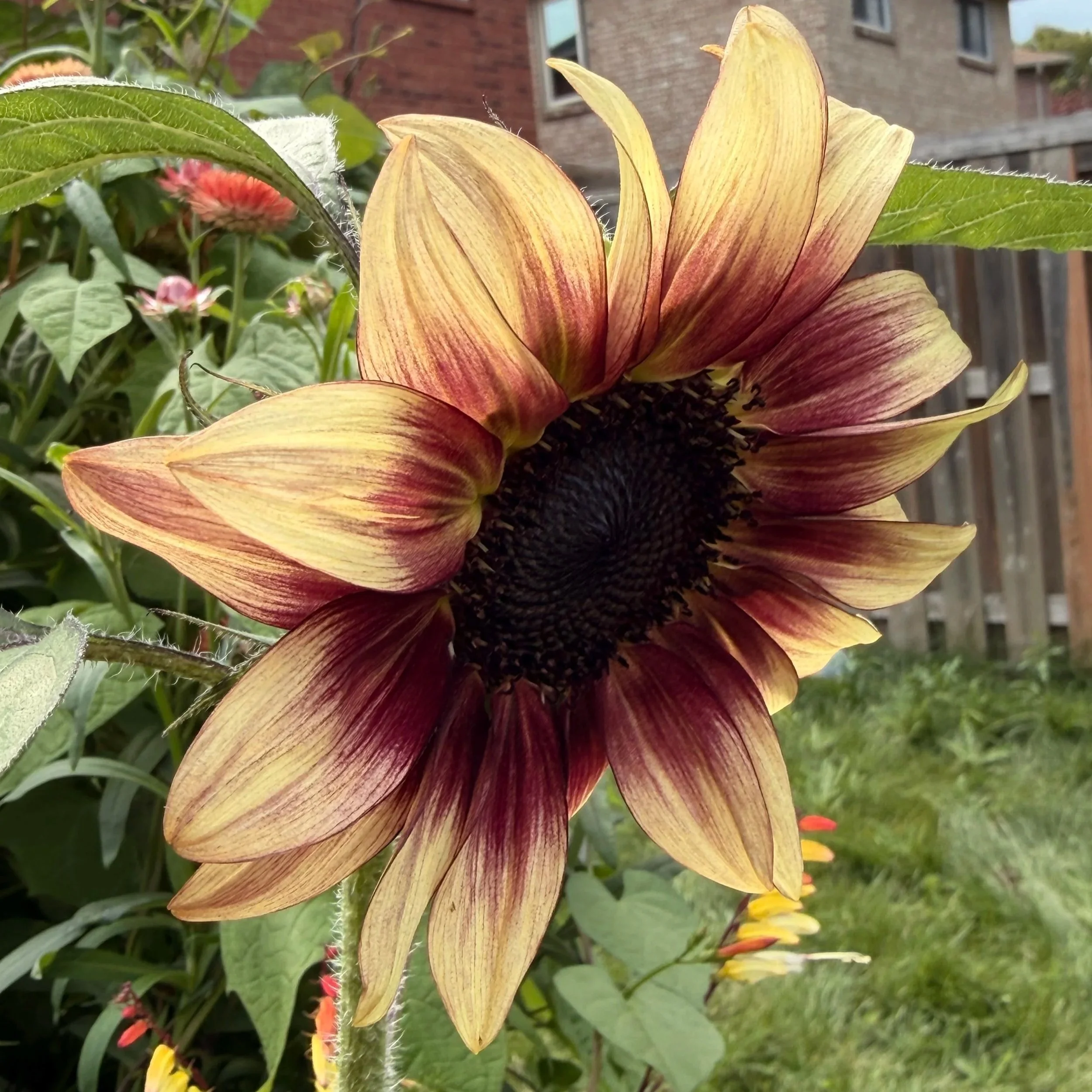
There is always room!
I stick sunflowers all over my garden! In garden beds for pole beans to climb. Smaller ones in raised planters. In flower beds, honestly if there is a smidge of space I am prone to popping in another sunflower.
🌻 The Sunflower Seed Harvest Test
Before cutting your sunflower, ask yourself:
Is the flower head drooping?
Has the back of the flower head started turning yellow or brown?
Have the petals dried and fallen away?
Are the florets dry and easy to brush off?
Do the seeds look full-sized and mature?
If most of those answers are yes, you're getting very close.
3 Ways to Protect Sunflower Seeds Until They're Ready
Here's where things get interesting.
You have three basic options: leave them in the garden, cut and dry them indoors, or protect the flower head while it finishes maturing.
Method 1: Let the Sunflower Mature in the Garden
This is my favourite method when I can get away with it.
Simply leave the sunflower on the plant and allow the seeds to mature naturally.
It's easy, requires no extra equipment and lets the plant do all the work.
The problem?
The wildlife knows exactly what you're doing.
One year I was feeling pretty damn confident about my giant sunflowers. I had beautiful Mammoth Grey Stripe sunflowers growing right in the middle of the garden, safely away from the fence.
Everything was going perfectly.
Then one morning I noticed sunflower seed shells scattered all over the ground.
The squirrels had apparently been invited to the harvest.
If birds and squirrels aren't a problem in your garden, leaving the heads to mature naturally is an excellent option. If they are a problem, you may need to move on to Method 2 or 3.
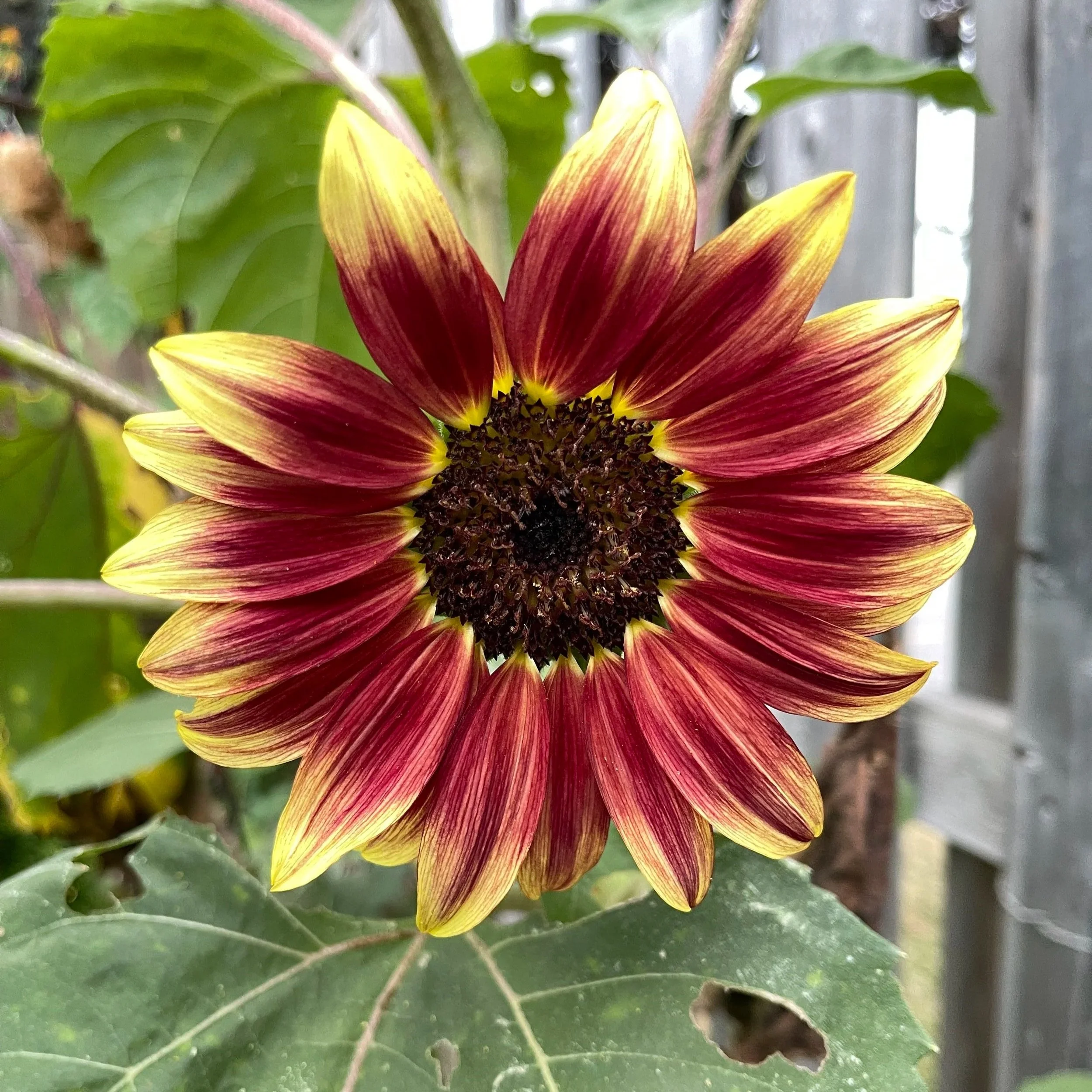
Beautiful colours 🎨
One of my favourite things about sunflowers (after how many pollinators they bring to my garden) is all the different colours and sizes you can get.
Method 2: Cut and Hang the Sunflower to Dry
If wildlife is getting to your seeds before you can, harvesting the mature flower head and bringing it indoors is probably your safest option.
Wait until the flower head shows clear signs of maturity and the seeds are developed.
Then:
Cut the sunflower head, leaving approximately 30–45 cm (12–18 inches) of stem.
Remove any large leaves around the remaining stem.
Tie the stem securely with twine or string.
Hang the flower head upside down in a dry, well-ventilated location.
Allow it to dry completely.
A garage, shed or other dry space can work well.
Don't forget: sunflower heads are heavy!
Seriously.
That beautiful giant flower head that looked perfectly manageable when it was attached to the plant becomes surprisingly awkward once you're holding it in your hands. (See the picture below of me struggling to hold up a Mammoth Grey Stripe sunflower head!)
Tie it securely and make sure whatever you're hanging it from can handle the weight.
And most importantly, make sure there's good air circulation. You don't want to put a damp flower head somewhere warm and enclosed and accidentally create the perfect environment for mould.
Method 3: Protect the Flower Head With Netting
If you want to leave your sunflower in the garden longer but the local wildlife has discovered your plans, you can protect the developing seed head.
Fine mesh, tulle or other breathable netting can be placed over the flower head once pollination has occurred and the seeds are developing.
The goal is to create a physical barrier between your seeds and the creatures that want to eat them.
A word of caution
Not all wildlife is equally impressed by your protective measures.
Some determined squirrels and birds can chew through or work around surprisingly creative barriers.
And don't use anything that traps moisture around the flower head. Good airflow is important because you don't want condensation and moisture encouraging mould.
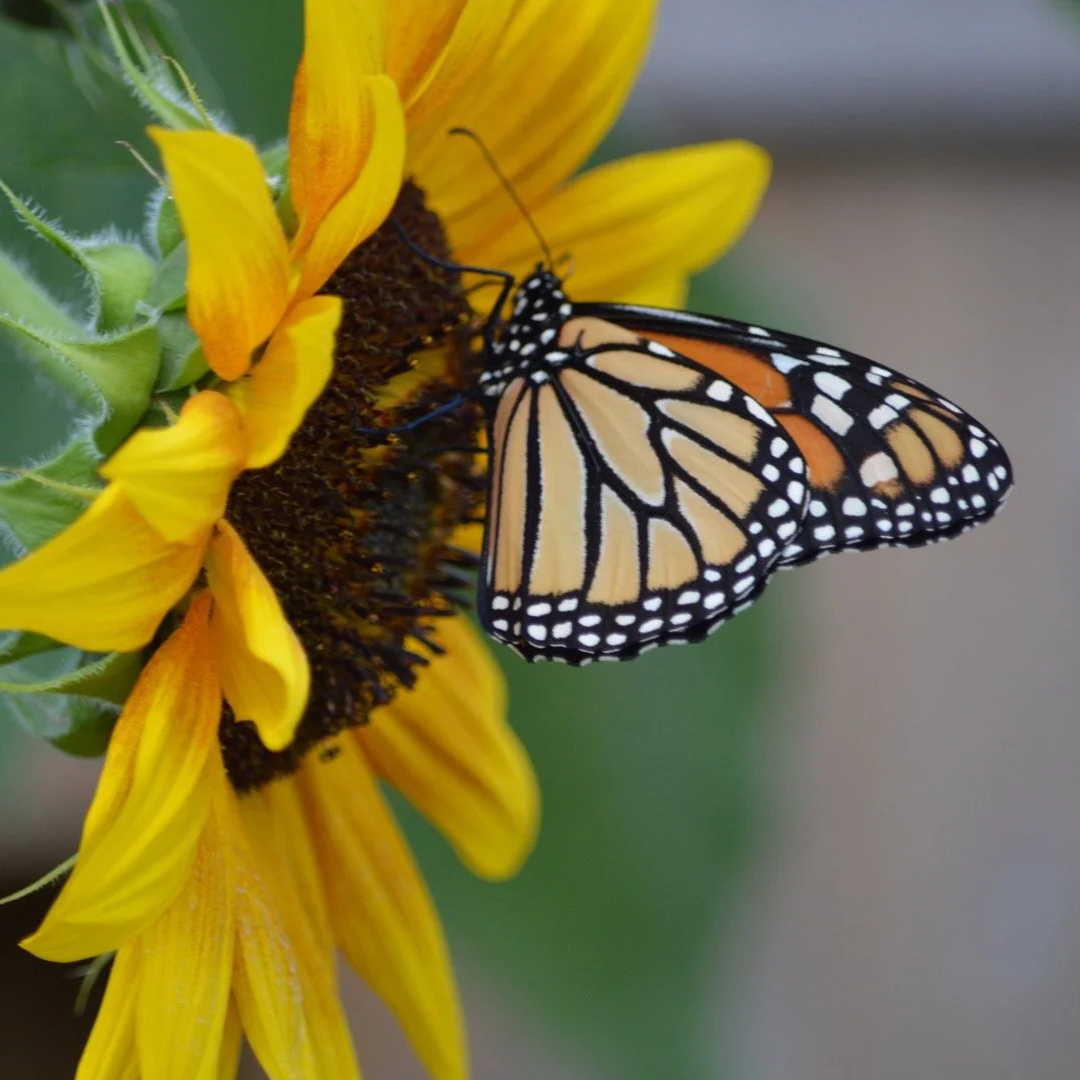
Noy just for bees! 🦋
I have seen many butterflies and especially monarchs making pit stops on my sunflowers. Which is always a welcome sight.
How to Harvest Sunflower Seeds
Once your sunflower head is completely dry, it's time for the fun part.
Place the flower head over a large bowl, tray or container.
Then use your fingers to rub or brush across the seed head. The mature seeds should loosen fairly easily.
You can also use a dry brush or gloved hands if you find the texture unpleasant.
Don't worry if some dried flower material comes loose with the seeds. You can separate the debris afterward.
How to Dry Sunflower Seeds for Storage
This is the part I am going to be annoyingly repetitive about:
MAKE SURE YOUR SEEDS ARE DRY.
Seriously.
There is nothing worse than going through the entire process of growing, harvesting and saving seeds only to have them develop mould in storage.
Spread the harvested seeds out in a single layer somewhere dry with good air circulation.
A tray, plate, paper towel or seed-drying rack can work.
Allow them to dry thoroughly before putting them into an airtight container.
Don't rush this part.
If you're unsure whether they're completely dry, give them more time.
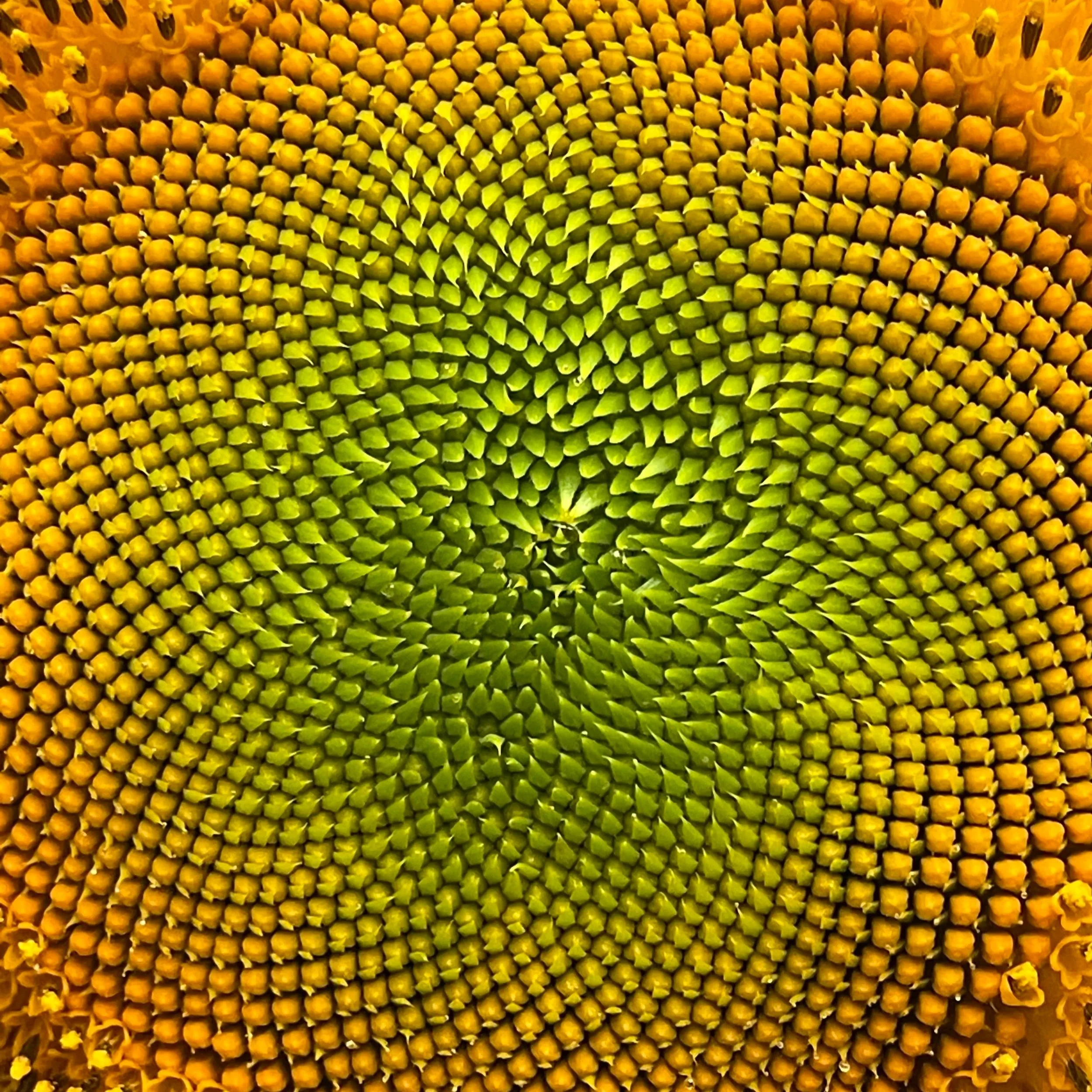
Beautiful to look at!
Sometimes I think my favourite stage of sunflower development is before the disc florets start to bloom. The patterns you can see are mindblowing.
How to Store Sunflower Seeds for Planting
Once your seeds are completely dry, store them somewhere:
Cool
Dry
Dark
Protected from moisture
Protected from insects and rodents
An airtight container or sealed seed envelope works well.
And label them!
Trust me.
You will absolutely remember what you planted this year.
Until next spring.
Then you'll stare at a collection of mystery seeds and wonder what the hell past-you was thinking.
Include:
🌻 Crop: Sunflower
🌱 Variety: Mammoth Grey Stripe
📅 Year harvested: 2026
If you're saving several varieties, keeping good labels becomes even more important. I designed some FREE downloadable seed packets and you can get them here.
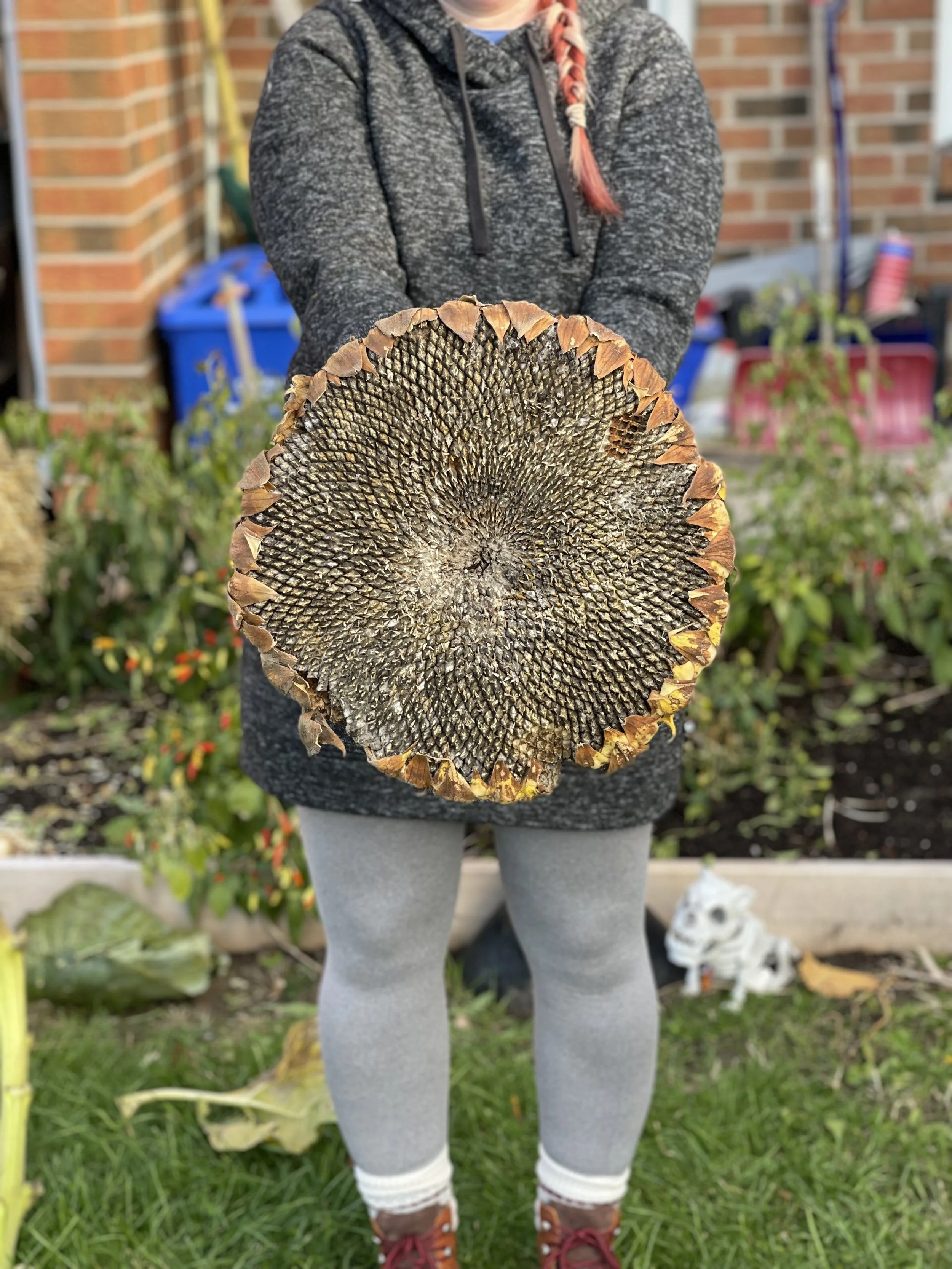
Growing some BIG sunflowers!
This was a Mammoth Grey Stripe sunflower that I grey in my front garden and it was MASSIVE!!!! It was so heavy to hold it out in front of me for this picture.
Can You Plant Saved Sunflower Seeds Next Year?
Yes!
That's one of the best things about saving sunflower seeds.
However, there's an important caveat.
If your sunflower was a hybrid variety, the plants grown from saved seeds may not look or perform exactly like the parent plant.
If you want more predictable results from year to year, look for open-pollinated varieties and save seeds from healthy plants that display the characteristics you want to reproduce.
And remember that sunflowers can cross-pollinate with other compatible sunflower varieties growing nearby, so the next generation may not always be genetically identical to the plant you harvested from.
Frequently Asked Questions
-
Look for a drooping flower head, drying petals, a yellow or brown back on the flower head, and plump, mature-looking seeds that loosen relatively easily.
-
Yes. You can harvest the flower head once the seeds are mature enough, even if the entire plant hasn't completely dried down.
-
You can save seeds from many sunflower varieties, but seeds from hybrid plants (typically labelled F1) may not produce offspring identical to the parent. Open-pollinated varieties are generally better choices for seed saving.
-
This is one of those “It depends” answers as there isn't one universal drying time because conditions vary. The important thing is that the seeds are thoroughly dry before being sealed into storage. If not you run the risk of finding moldy seeds when you go to plant them in the spring!
-
Under cool, dry, dark storage conditions, properly dried sunflower seeds can remain viable for several years, although germination rates generally decline as seeds age.
-
Absolutely. If you're growing sunflowers primarily for wildlife, you can leave mature flower heads standing for birds or harvest and offer the dried heads later in the season.
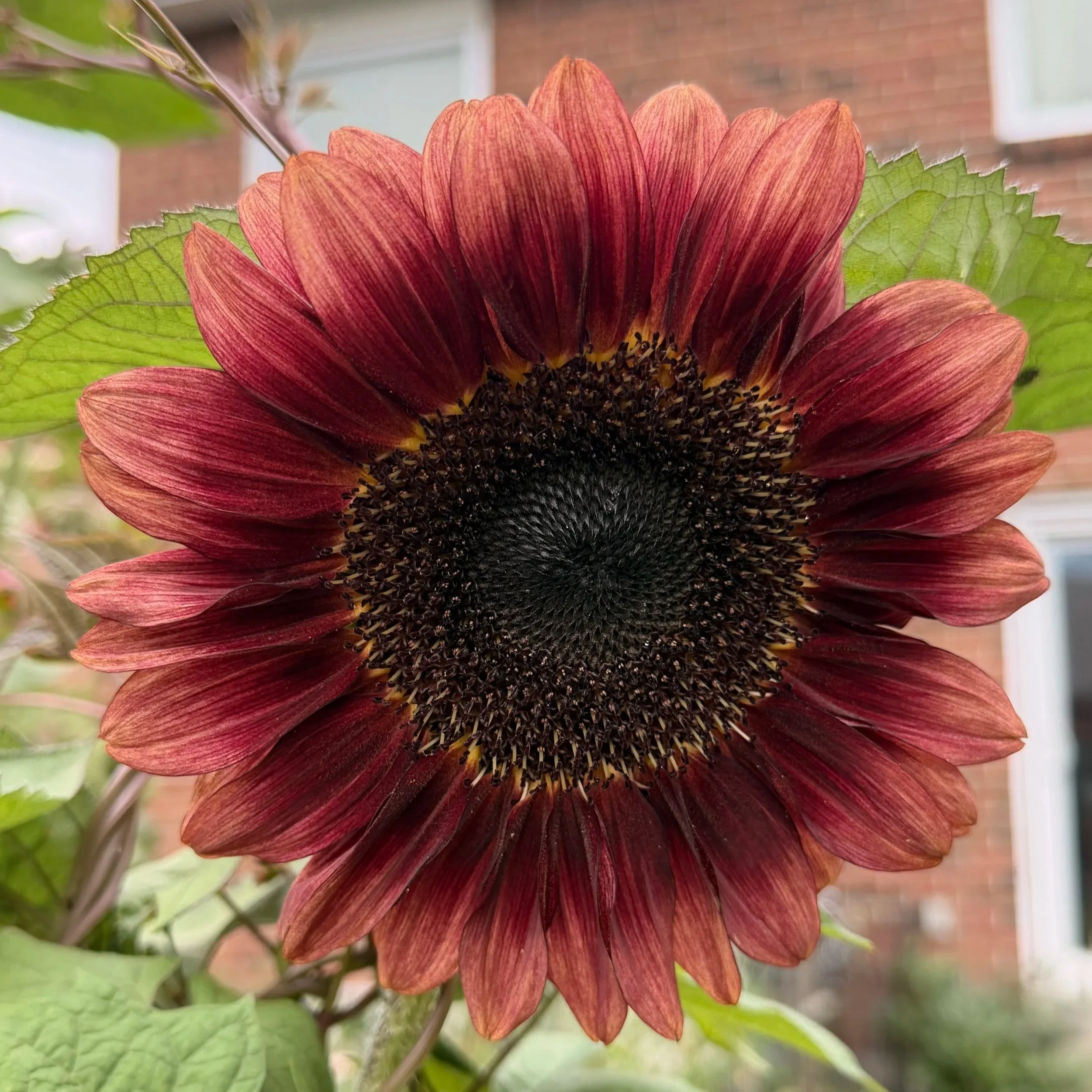
I’m a sucker for red.
Some of my favourite sunflower colours are the reds and red and yellow ones. You can even get some that don’t produce a lot of pollen so they are great to cut and bring indoors.
🌱 Final Thoughts
Saving sunflower seeds is one of those gardening jobs that looks much more complicated than it actually is.
Grow the sunflower.
Let the seeds mature.
Protect them from the squirrels.
Harvest.
Dry thoroughly.
Label.
Store.
That's basically it.
And honestly, there's something pretty damn satisfying about pulling out a packet of seeds in spring that you saved from your own garden the year before.
It's one tiny way of making your garden a little more self-sufficient—and once you start saving seeds, it can become seriously addictive.
Because why buy more seeds when your garden is already making them for you? 🌻
